
Summit Resident Lookup Sources
A name has more value when the record relationship is clear. The Summit tax query and related property records can identify an assessed parcel owner and a situs address. The Union County Clerk index can place a person in a recorded transaction. State voter, court, vital, business, and archive routes each answer narrower questions. None creates a complete roster of people at an address. Start with the record that fits the fact you need, then preserve the date and the exact spelling that produced the result.
| Record | What It Confirms | Where | Access |
|---|---|---|---|
| Tax parcel or owner report | Assessor owner, situs, and possible mailing address | Summit tax query | Public query; owner is not necessarily an occupant. |
| Recorded deed index | Named party and transfer history | Union County Clerk index | Online generally from June 1, 1977; Record Room holdings from 1857. |
| Voter registration | Regulated registration status and related list fields | NJ registration check | Protected addresses are omitted; status is not proof of occupancy. |
| Court docket | Party, docket, case type, and disposition metadata | NJ Courts Find a Case | Sealed, expunged, juvenile, and confidential matters are withheld. |
| Vital or archive record | Eligible event copy or historical research lead | NJ vital-record ordering | Current records require eligibility and identification; no public online search is stated. |
| Business or license record | Filed role or credential status | NJ business records | A role or credential does not establish Summit residence. |
Use a property record when the question is ownership, a docket when a case number or division is known, and an archive or directory for a dated historical connection. A former Summit address can also lead to a deed, a later directory, an obituary, probate material, or a successor parcel record. Write down whether each hit describes an owner, a voter, a court party, a published address, or another role.
Court Names in a Summit Resident Lookup
The statewide NJ Courts Find a Case menu separates civil and foreclosure matters, criminal matters, criminal judgments, judgment liens, Tax Court, and municipal cases. The route and available fields change with the division. Civil and foreclosure work can begin with a party or docket; criminal pathways can use a name and county or other listed identifiers; Tax Court can use a party, docket, or block and lot. A match may show metadata or a document list, not the pleading itself.
The Summit Municipal Court public page did not expose a Summit-specific name-search form during research. When only a person or address is known, use the court contact or the applicable record-request route. At the Union Vicinage, a clerk can clarify whether an archived file, public terminal, document list, or certified copy is available. A no-result may reflect spelling, county, division, date, an archived system, or a lawful restriction. It is never proof that a person has no court history.
The official NJ Courts Find a Case menu is shown below as a Summit resident lookup starting point for choosing the correct court route.
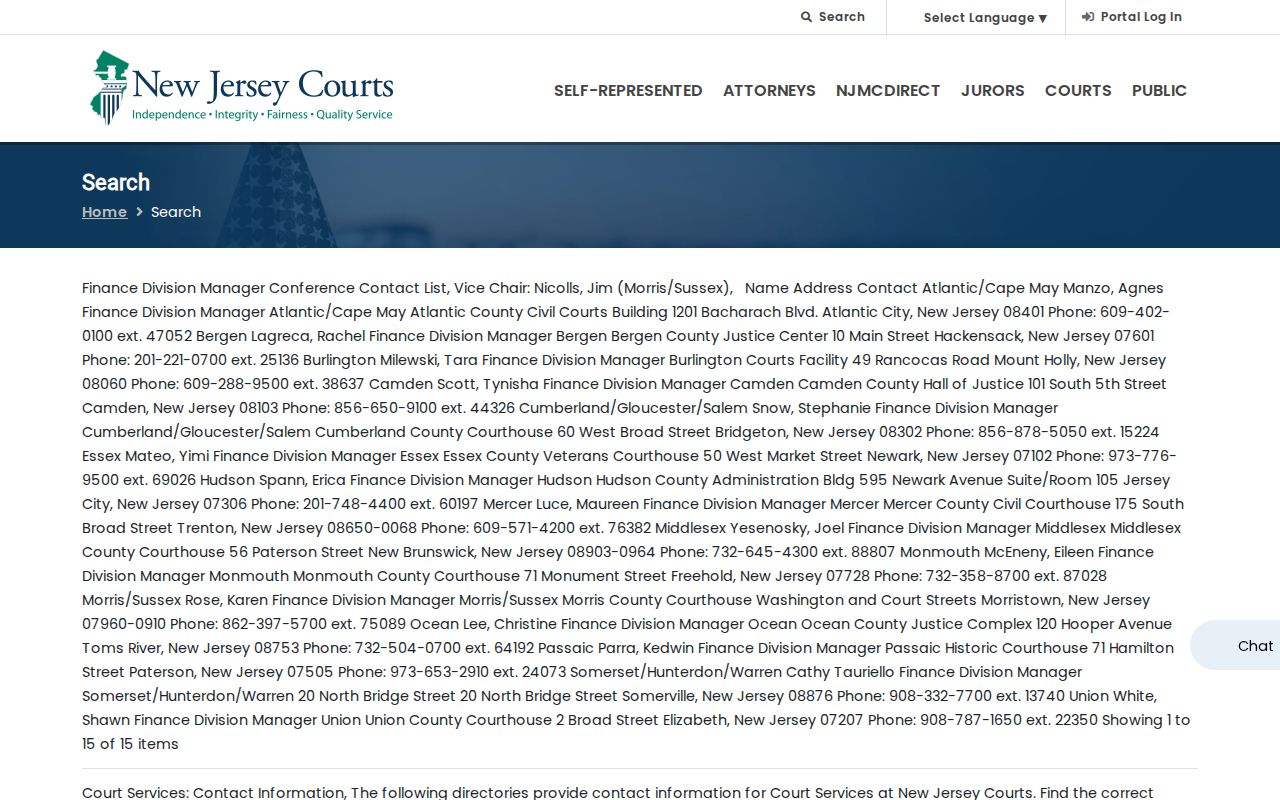
Use the menu to narrow the case type first, then save the court, venue, docket details, status, and access date with any result.
| Visible docket item | Why it matters |
|---|---|
| Case caption, court, and venue | Separates similar names and identifies the responsible court. |
| Initiation date and case age | Places the item in a time period. |
| Type, status, and disposition | Describes the case record, not a general personal profile. |
| Docket number, year, and division | Lets a clerk locate the correct file or explain limits. |
Subscriber electronic access has separate conditions, including a stated per-minute charge and no downloads or screen scraping. It can show filed-document lists and case metadata, but not the actual text or images of documents. Request an underlying copy from the relevant clerk when the document itself matters.
Note: Summit court results require the correct division, date, and party spelling before they can support a person-specific conclusion.
Summit Voter Checks Need Context
The State Elections Division links the NJ registration check for a specific voter search. The documented pattern uses first name, last name, and birth month and year, with a middle initial tried as a variation. Hyphens, spaces, and exact county spelling can affect a match. The research capture faced an official access limitation because the public page returned a 403 response to the automated browser, so unobserved live result fields are not claimed here.
| Field or control | Format | Use in a Summit check |
|---|---|---|
| First and last name | Text | Use exact spellings, then cautious variants. |
| Middle initial | Optional text | Try with and without it where appropriate. |
| Date of birth | Month and year | Use the documented MM/YYYY pattern, not a full date. |
| County and municipality context | Location context | Use Union County and Summit to distinguish nearby places. |
The official registration-check route is preserved below. The image documents the official access limitation, not a verified result screen.
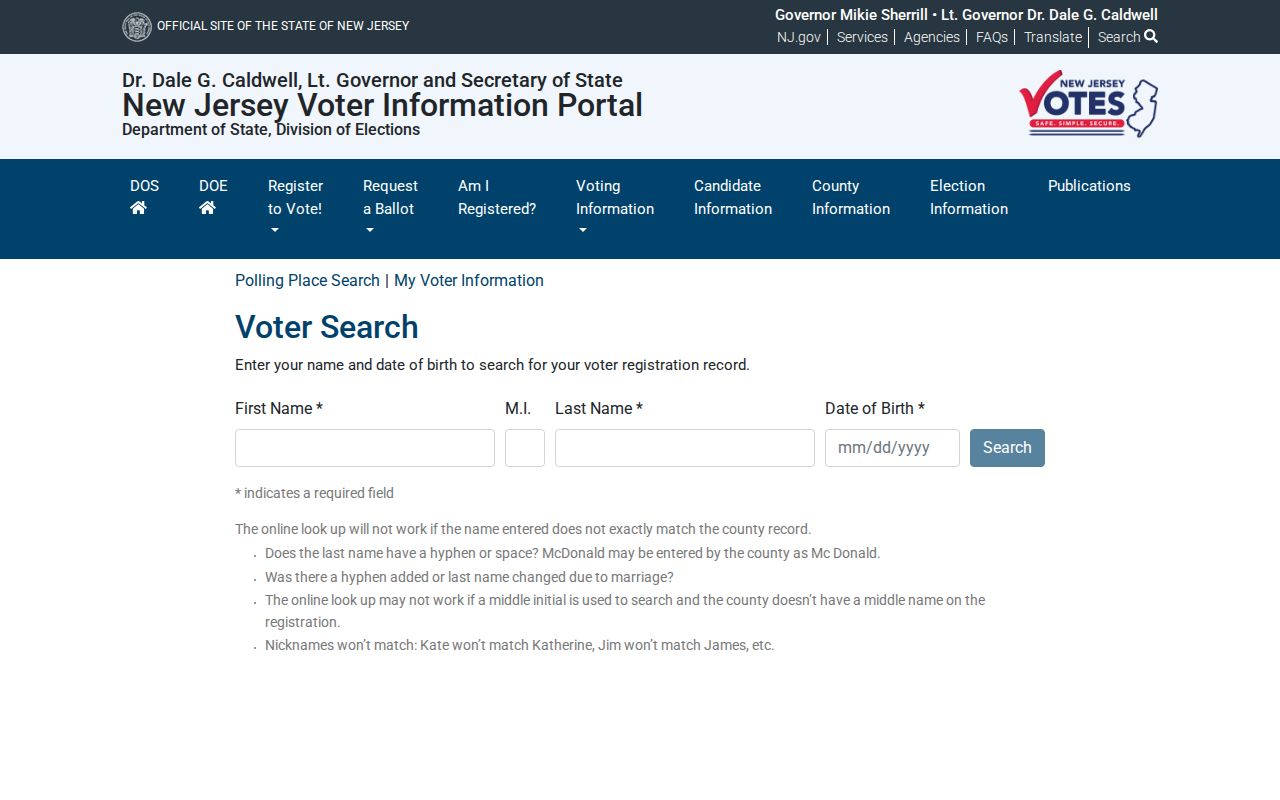
A voter result reflects election administration. An inactive status can follow an undeliverable sample ballot, and it does not establish where a person currently lives.
N.J.S.A. 19:31-18 identifies regulated list fields and omits covered-person addresses. For a documented county request, the Union County Board of Elections handles voter-list questions and election-document forms. Do not reproduce a bulk voter file or protected address.
Vital Records for Summit Names
Vital certificates follow a different path from court files. Summit Health and Vital Statistics can issue eligible local copies, the New Jersey Department of Health routes statewide requests, and the State Archives serves older historical research. A divorce is a Family Division court matter, not a vital certificate. A newspaper notice or a historical index may be a useful lead, but it cannot replace a certified copy from the proper custodian.
The Summit REG-37A form asks for the requestor's relationship, contact details, identity materials, the event type, event details, and required documentation. It allows certified copies, apostille copies, and certifications by the form's terms. It is available by mail or in person, not by fax. Local listed fees are $20 for a birth, marriage, civil union, or domestic-partnership copy and $10 for a death copy.
New Jersey restricts non-genealogical births within 80 years, marriages within 50 years, deaths within 40 years, and all civil unions and domestic partnerships. Genealogical access is tied to a death requirement and the related age thresholds. Ask the NJ genealogical-records service or the Archives for the applicable period rather than assuming an online name search exists.
Verify a Summit Resident Record
A reliable Summit resident lookup compares records that were created for different purposes. Begin with the narrowest lawful identifier, such as a dated address, a historical year, a docket number, or an instrument number. Search variants separately, including initials, suffixes, hyphens, married or maiden names, and trust or corporate names. A shared surname and city name are weak evidence because regional directories combine Summit with nearby municipalities.
- Search the Summit tax query by address, block and lot, or account number to identify the parcel relationship.
- Check the Union County Clerk index for a dated grantor or grantee record, and save the instrument details rather than assuming a household connection.
- Use the proper NJ Courts division for a party or docket search, then compare court, date, and record type with the property or historical evidence.
- For an eligible vital event, submit the custodian's form and identification materials. Request a certified copy only when the record type and eligibility rule permit it.
- Docket
- A court's identifying number for a case, usually read with the division and year.
- Index versus image
- An index points to a record; an image is the scanned record itself. One may be available without the other.
- Certified copy
- A copy issued by the custodian with the certification required for the record type and eligible requester.
Separate the record relationship from the place relationship. A grantee has a legal interest, a directory entry has a published address, a business officer has a filed role, and a court party has a docket role. Call someone a resident only when the record actually supports residence.
Historic Summit Resident Leads
For a former classmate, relative, heir, or family-history question, older local material can be more useful than a current record. The Summit Historical Society holds house files, genealogy files, directories, maps, newspapers, photographs, postcards, yearbooks, and tax atlases. The Summit Public Library offers research help, scanning, computers, and genealogy or history resources. Ask whether a surname, organization, or street appears in a finding aid before seeking a scan or appointment.
The Society says its directory holdings date back to 1890, although a complete year-by-year run was not located. The digitized 1938 and 1956 Price & Lee volumes combine Summit, Millburn, and Springfield. Confirm the municipality heading before assigning an entry to Summit. For a deeper historical address trail, the Summit Directory Book explains how alphabetical and numerical sections work together.
This is a practical human-use route: a house file, directory, or yearbook can turn a parcel or surname into a dated local-history lead. It still needs a second source, such as a deed, map, newspaper, obituary, or court record, before a person is identified with confidence.
Note: A city-directory entry is an edited annual snapshot, so it should never be read as a complete household census.
Summit Resident Lookup Roles
New Jersey's business and professional systems can supply a distinct kind of verification. The Division of Revenue business-records service searches entity records, while the DOBI real-estate license search supports partial-name, license-reference, type, and status searches. A result can establish a filed role, an entity status, or a credential. It does not show that the person lives in Summit.
The local community resource directory has letter, category, and name search and contained 81 curated listings at inspection. It is a public organization-contact resource, not a resident roster. Use an organization name to search dated minutes, newspapers, directories, or an archive collection, then label the resulting relationship carefully.
OPRA Paths for Summit Records
When a public search has no accessible record, make a defined request for an existing record rather than asking an office to locate a person. The City OPRA portal supports account, request, status, communication, and response functions for municipal records. Basic records such as permits, maps, planning and zoning material, budgets, and other listed records may already be linked there. Municipal records belong with the City Clerk; county records should go to the proper Union County custodian.
New Jersey's Open Public Records Act, N.J.S.A. 47:1A-1 et seq., requires a written request to the appropriate custodian. The Union County form offers pickup, mail, inspection, fax, and email, and documents listed copy charges and potential special-service or deposit costs. It also identifies privacy fields that can be redacted. Accept a redacted copy, bounded date range, or inspection when that is what the custodian can lawfully provide.
Resident Lookup Privacy in Summit
Public access has firm boundaries. The Address Confidentiality Program provides a legal substitute address and mail forwarding for eligible people who relocate because of threat or violence. Daniel's Law provides suppression protections for covered judges, prosecutors, law-enforcement personnel, and immediate family. A protected address, a sealed court file, a restricted vital record, or a redacted voter field is a stop point, not a puzzle to work around.
The New Jersey privacy framework also limits motor-vehicle information, and a public parcel or deed field does not make unrelated personal details available. If a person finds an error in a record, contact the agency that holds that record and preserve the result, date, and custodian response. Public data can be old, incomplete, or tied to the wrong person with the same name.
Lawful use. A Summit resident lookup is for personal, historical, civic, or property-record research. Never use a result to stalk, harass, intimidate, or expose a protected person.
Summit Resident Lookup No-Result Notes
An honest no-result note names the route, date, spelling, jurisdiction, and restriction that were checked. A missing court result may be sealed, expunged, juvenile, confidential, archived, or filed under a different division. A missing voter response can reflect exact-spelling or protected-address rules. A missing vital record can reflect eligibility limits. A missing historical directory entry can reflect a combined volume, an incomplete year run, or the publisher's canvass.
For a land-record trail that reaches the online cutoff, use the County Clerk Record Room, whose land transactions are described as reaching back to 1857. For an archival lead, use the library or Historical Society. For a municipal record, send a specific OPRA request. Label what was not located instead of converting absence into a conclusion about the person.